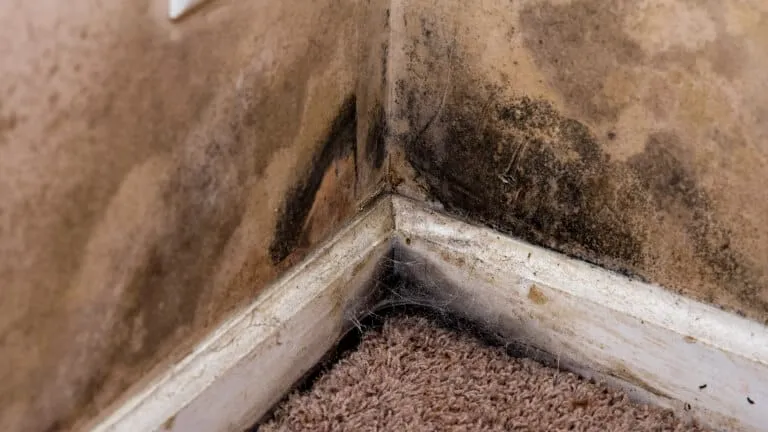
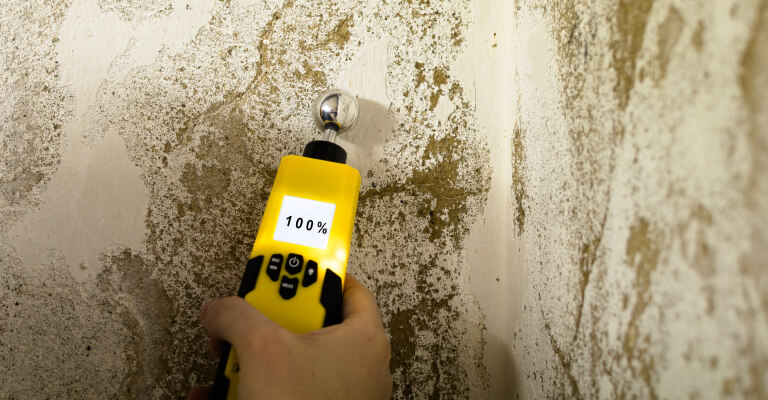
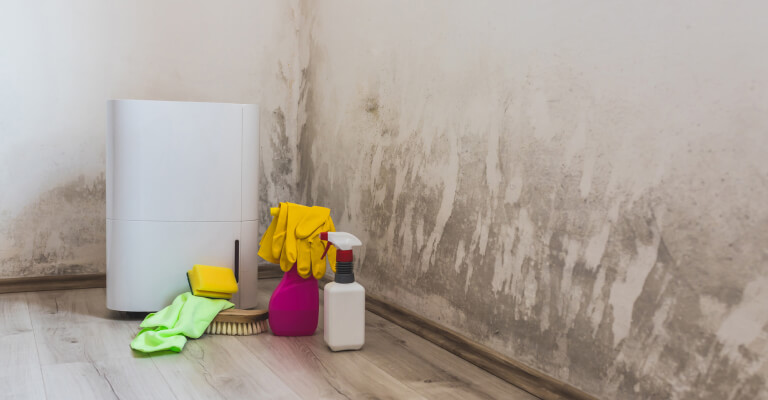
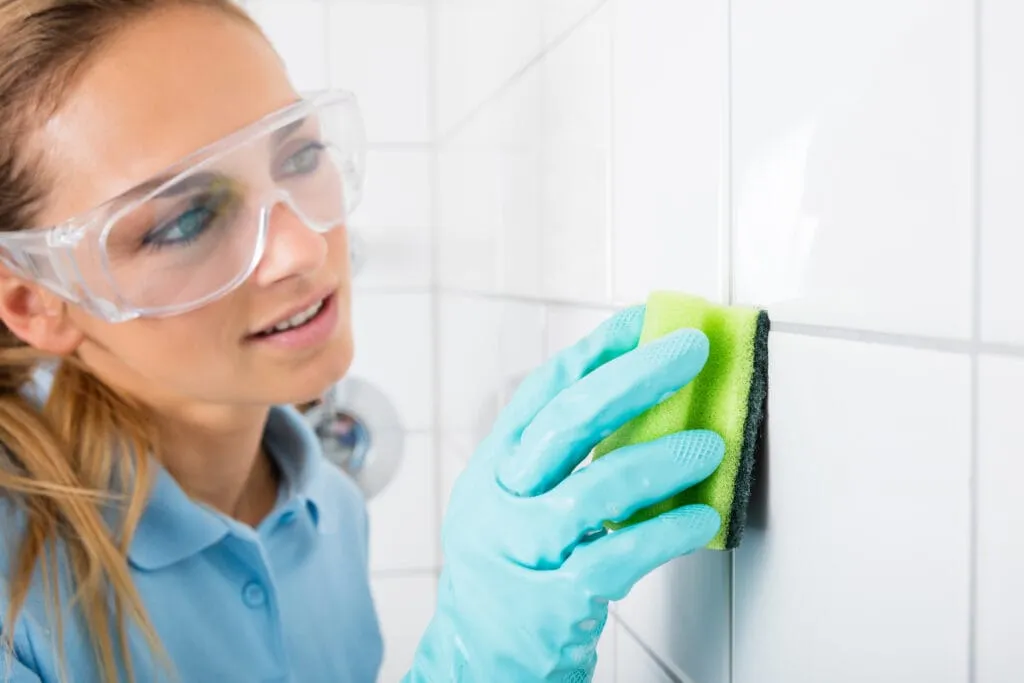
Mold in your basement can be a damaging invader. According to the EPA, all it just takes is just a little moisture before naturally occurring mold spores start their rapid growth. Paired with the low airflow of basements, moisture can cause mold growth easily and potentially damage property. Mold is also extremely hazardous to your health if it’s left to sit and grow for long enough.Removing mold in basement areas can be a daunting task, and it’s hard to know when to call in a professional versus what can be reasonably handled by yourself. This guide will walk you through what you need to know about mold in your basement, the steps and tools to get rid of it, and when you should call in a professional.
What is mold?
Mold is a type of fungus that forms and spreads on damp or decaying surfaces. Mold is a natural way that the environment breaks down organic debris, and tiny mold spores are present everywhere. When mold spores come into contact with a damp surface, they either begin to grow or try to break down the item that they’re growing on, such as natural fibers and untreated wood. Certain types of mold can even release toxins, which can become a health hazard over time.
Where to look for mold in your basement
Mold will try to grow wherever there is moisture. In basements, moisture commonly comes from:
HVAC condensation
Leaky pipes
Unsealed foundation and basement walls
Poor basement ventilation
Condensation from appliances
Leaking appliances
Faulty sump pump
By checking around your HVAC unit and appliances for any liquid or condensation, under overhead pipes, and along where basement walls meet the floor, you can usually find where mold has settled and started to grow.
How to test for mold in your basement
Fokusiert / GettyIf you’re not confident in identifying mold, there are several mold detection kits that you can buy online to collect a sample and have them sent to a lab for testing. Simply follow the instructions and place the sample in a pre-addressed envelope to get to the lab.You should take immediate action to stop mold in basement areas, even if you just suspect it. Some molds are technically more damaging than others, but the CDC states that all molds should be removed, and the type of mold present in your basement is ultimately irrelevant.
Common types of basement mold
The National Institute of Environmental Health Sciences (NIEHS) lists five different types of mold as the most common:
Cladosporium: Usually brown, but also black or gray, this type of mold is common in soil and organic material throughout the world. This type of mold is relatively slow-growing.
Penicillium: Used in the development and manufacture of the life-saving antibiotic penicillin, Penicillium is also common throughout the world and is fast-growing and usually green or white.
Aspergillus: This fungus lives outdoors and indoors, and most people can tolerate it without issue. However, in rare cases, it can cause an infection called Aspergillosis that can be very damaging to people with weakened immune systems or lung problems like asthma.
Alternaria: Fast-growing and brown, olive, or black, this mold can cause serious infections, but cases are generally rare and accompanied by an underlying condition.
Stachybotrys chartarum: Also known as toxic black mold, Stachybotrys chartarum is arguably the most common household mold, is black to greenish in color, fast-growing, and notorious for thriving on building materials like drywall, wood, gypsum board, and coverings like wallpaper.
How to get rid of mold in your basement
coja1108 / GettyAccording to the CDC, you cannot completely get rid of mold spores in your basement, but you can remove the source of moisture and remove the mold that has grown from it. The following steps suggested by the CDC and EPA will help you get rid of mold in your basement:
Step 1: Quickly stop the source of moisture to prevent mold from growing further
Depending on the problem, you may have to perform significant repairs to stop the moisture. If it’s a leaky pipe, condensation in your HVAC system, or a crack in a doorway or window, make sure to either repair or have a professional repair it as soon as possible. If there is a moisture problem from your basement walls, run a dehumidifier to dry excess humidity.
Step 2: Remove moldy material if possible
If the mold has damaged a small area of soft or fibrous material like carpet, ceiling tiles, or wall material that’s not load-bearing (such as wood studs or cement), you can remove the material yourself and replace it. Just be sure to wear protective eyewear, disposable dust masks, gloves, and possibly protective clothing so you can ensure you’re not bringing the mold into your living spaces.
Step 3: Clean moldy material that can’t be replaced
For walls, floors, and other hard surfaces, use a bleach solution (1 cup of bleach per gallon of water) and/or commercial cleaners to wash and kill the mold while wearing the same protective gear mentioned in step two. Use disposable sponges and other cleaning materials so you can throw them away and keep them from spreading spores to other places in the house.
Items you’ll need to get rid of mold in basement areas
Dusk mask or respirator: You don’t need a medical-grade mask or a professional reusable respirator, but some sort of mask will protect you from the damaging effects of mold while working around it.
Eye protection: When disturbing mold spores during cleaning or simply using harsh chemicals like bleach, you’ll want to keep your eyes protected.
Disposable gloves: Handling mold and moldy material is reason enough to wear gloves, but it can also protect your skin from irritation when using cleaning products.
Stiff-bristled brush: To effectively remove mold stains on porous or rough surfaces, you will need a brush that can scrub away mold without the bristles collapsing.
Sponge: On softer or smoother surfaces, a disposable sponge may be all that’s needed to stop mold spots from becoming more significant problems.
Mold stain remover: Though not essential for actually removing mold, you’ll likely find a dark stain on the material that the mold was growing on and you’ll want a product to remove it. Plus, removing the old stains can make sure that you recognize new mold growth later.
Bleach: A solution of 1 cup (8 ounces) of bleach to 1 gallon of water is enough to kill mold on surfaces, according to the CDC.
Spray bottles: Whether for bleach or one of the more natural solutions discussed below, a spray bottle will help you treat mold spots.
Don’t want to use chemicals? Here’s how to get rid of mold in your basement naturally
Understandably, some households want to avoid using harsh chemicals in the home to treat mold, especially if it’s a small and manageable amount. Thankfully, there are several natural and less-harsh products to clean mold away.For example, vinegar and baking soda are both acidic and can be used to scrub away mold and help kill the spores in its wake. Simply make a half-water, half-vinegar solution, spray on the mold, leave overnight, and come back the next day to scrub with soapy water. For baking soda, make a paste of 50:50 baking soda and water to use as an abrasive scrub, or mix 2 tablespoons of baking soda with 2 cups of water in a spray bottle and spray the solution on the affected area before scrubbing.Though these methods are usually effective in getting rid of mold in basements, more serious problems may require stronger solutions or professional intervention.
When to call in a professional
Most basement mold cases are easy to tackle with the methods discussed in this guide. But major problems like hidden moisture leaks, floods, or ruptured pipes can lead to an explosion of mold growth in materials that have to be replaced. When you experience widespread mold, the job is better left to a mold remediation specialist.Companies that maintain an American Council for Accredited Certification (ACAC) mold certification have the qualifications to safely remove moldy material and remediate mold on surfaces that cannot be replaced. Many of these businesses also specialize in basement encapsulation to prevent further problems from mold in basement areas.
The bottom line
Mold can be scary, especially if you or a loved one has allergies or sensitivities. However, you can get rid of mold in your basement by fixing the moisture issue, removing unsalvageable material, and putting a little elbow grease into cleaning the affected area. Just remember to be safe, watch for cross-contamination, and never hesitate to call a professional if the problem becomes more than you can handle.
If your home's windows have dirt, dust, water spots, and other debris covering them, you might not be getting as much natural light as you would like. The best way to bring in additional light (and enjoy the view) is by keeping them clean. If window cleaning isn't at the top of your to-do list to...
Cleaning grout from your bathroom tiles may seem straightforward, but it can be quite difficult. Due to grout's porous nature, it quickly absorbs anything that sits on top of it. But getting grout as clean and white as it was when first installed is not impossible. Using the right materials and...
Who doesn’t love a good cleaning hack? Whether you constantly clean your home, or just give it a quick tidy up before guests arrive, knowing a few useful cleaning tips can help make the process easier and more efficient. To help you get your home looking good as new again, we’ve compiled a list of...